
When monitoring specific OIDs with a custom SNMP sensor, the sensor shows the error message that ''x' is not a valid floating point'. What does this mean and what can I do about it?
How can I avoid the message ''x' is not a valid floating point value' in SNMP sensors?
Modified on 2025-06-10 12:17:34 +0200
Attention: This article is a record of a conversation with the Paessler support team. The information in this conversation is not updated to preserve the historical record. As a result, some of the information or recommendations in this conversation might be out of date.
Disclaimer:
The information in the Paessler Knowledge Base comes without warranty of any kind. Use at your own risk. Before applying any instructions please exercise proper system administrator housekeeping. You must make sure that a proper backup of all your data is available.
The information in the Paessler Knowledge Base comes without warranty of any kind. Use at your own risk. Before applying any instructions please exercise proper system administrator housekeeping. You must make sure that a proper backup of all your data is available.

This article applies to PRTG Network Monitor 18 or later
Workaround for ''x' is not a valid floating point value'
You might receive the error message 'x' is not a valid floating point value when you use SNMP Custom, SNMP Custom Advanced, or SNMP Library sensors to monitor an OID that returns a value with a comma "," like 27,5545 as a float value.
Check the Value Returned by the OID
Click to enlarge.
The value 29,14885454 is correct and includes a comma but it is read as a string value and not a float value.
Click to enlarge.
The value 2914885454 is incorrect because it does not contain a decimal separator. The float value returned by the SNMP request must contain a dot '.' as decimal separator, otherwise PRTG cannot interpret the value.
Solution: Create an SNMP Custom String Sensor
The SNMP Custom String sensor allows you to extract a floating point value from a string result using a regular expression.
The sensor now shows the correct value.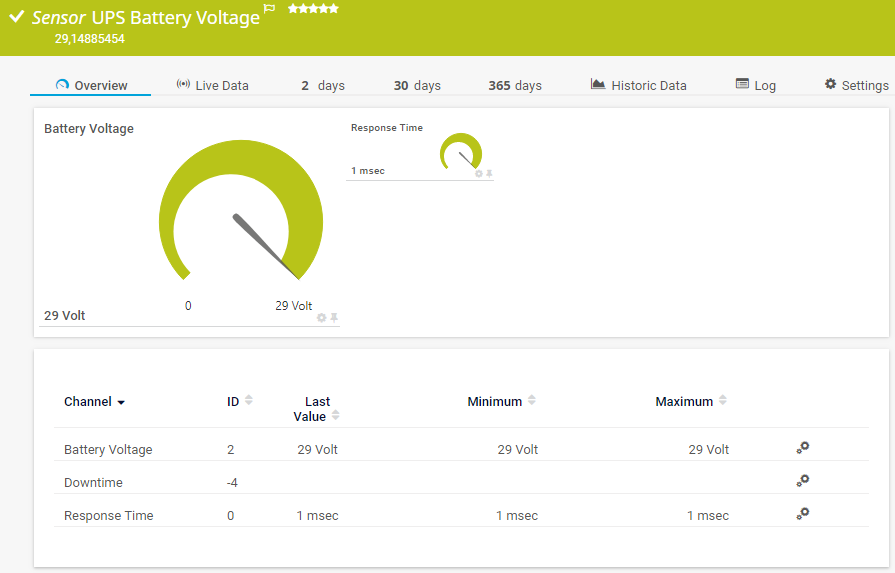
Click to enlarge.
See Also
Jan, 2019 - Permalink